Users from outside the state of São Paulo whose proposals are approved may apply for travel and lodging assistance
Throughout 2026, the Brazilian Center for Research in Energy and Materials (CNPEM) will accept research proposals from the external academic community for the use of the Bioassays Laboratory (LBE), a facility operated by the Brazilian Biosciences National Laboratory (LNBio). Proposals will be accepted on a rolling basis until November 27, and approved projects will be carried out through December 11, 2026.
Equipment and methods are key differentiators at LBE
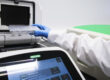
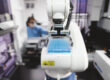
The Bioassays Laboratory (LBE) offers strategic, state-of-the-art infrastructure for the development, validation, and execution of biochemical and cellular assays, supporting different levels of experimental complexity, from exploratory studies to high-throughput and high-content screening (HTS/HCS) campaigns, thereby expanding experimental possibilities for academic projects.
Some of the strategies available at LBE include:
-
Biochemical assays: colorimetric, fluorimetric, fluorescence polarization, and luminescence-based assays, with experimental flexibility for different classes of targets and mechanisms of action. For screening campaigns, LBE offers preliminary data analysis via CDD Vault, with robust statistical tools for hit identification;
-
Cell-based assays: high-content microscopy imaging assays (HCS), compatible with different plate formats. The platform is ideal for phenotypic screening, target validation, mechanism-of-action studies, and large-scale multiparametric analyses;
-
Biophysical assays: protein thermal stability assays (Thermal Shift Assay – TSA) in 96-well plates, enabling the determination of melting temperatures (Tm) for the evaluation of protein mutants, small-molecule screening, buffer optimization, and protein–ligand interaction studies.
Assays can be performed using a variety of analytical methods, including colorimetry, fluorimetry, fluorescence polarization, and luminescence, ensuring versatility and precision for different types of analyses. Learn more about the equipment and additional details about the open facility.
Scientific support and user assistance
The LBE team provides comprehensive scientific support, from experimental design and definition of controls to execution, data analysis, and interpretation, ensuring quality, reproducibility, and methodological rigor.
In addition to conducting assays, the facility promotes knowledge transfer and technical training, contributing to the development of researchers and professionals in the scientific field.
Financial assistance is granted to users of the open facilities who have scheduled proposals to support the execution of experiments. Assistance and funding amounts—available exclusively to users from outside the state of São Paulo—can be found on the CNPEM User Office (EdU) assistance page.
How to submit your proposal
Proposals will be selected based on the technical feasibility of the proposed protocol, taking into account the specifications of the available equipment.
For the establishment of new protocols, online meetings will be scheduled between the LBE team and the user to align needs and ensure experimental feasibility. If you have questions about the facility or its protocols, please contact us at lbesuporte@lnbio.cnpem.br.
Proposals must be submitted exclusively through the SAU online system.
Important dates
Start of submission period: January 5, 2026
End of submission period: November 27, 2026
Experimental period: February 2, 2026 to December 11, 2026
About LNBio
The Brazilian Biosciences National Laboratory (LNBio) is dedicated to the study of human health, combining integrative biology with advanced technologies. With competencies in gene editing, microphysiological systems, bioimaging, and tissue engineering, LNBio works to discover molecular targets and develop innovative therapies for illnesses that are of public importance. This broad approach, which includes molecules and living organisms, unravels molecular mechanisms to identify bioactive compounds that are essential to develop new active pharmaceutical ingredients. LNBio concentrates its efforts on demands from the public health system, using state-of-the-art infrastructure and a matrix work model to promote innovation and development at the crossroads between science and health. To integrate health with socioeconomic and environmental factors, LNBio serves as a scientific platform that is available to the government, able to develop advanced technologies that respond to strategic issues. LNBio is part of the Brazilian Center for Research in Energy and Materials (CNPEM) in Campinas, São Paulo, a private, non-profit organization overseen by the Ministry of Science, Technology, and Innovation (MCTI).
About CNPEM
The Brazilian Center for Research in Energy and Materials (CNPEM) is home to a state-of-the-art, multi-user and multidisciplinary scientific environment and works on different fronts within the Brazilian National System for Science, Technology and Innovation. A social organization overseen by the Ministry of Science, Technology and Innovation (MCTI), CNPEM is driven by research that impacts the areas of health, energy, renewable materials, and sustainability. It is responsible for Sirius, the largest assembly of scientific equipment constructed in the country, and is currently constructing Project Orion, a laboratory complex for advanced pathogen research. Highly specialized science and engineering teams, sophisticated infrastructure open to the scientific community, strategic lines of investigation, innovative projects involving the productive sector, and training for researchers and students are the pillars of this institution that is unique in Brazil and able to serve as a bridge between knowledge and innovation. CNPEM’s research and development activities are carried out through its four National Laboratories: Synchrotron Light (LNLS), Biosciences (LNBio), Nanotechnology (LNNano), Biorenewables (LNBR), as well as its Technology Unit (DAT) and the Ilum School of Science — an undergraduate program in Science and Technology supported by the Ministry of Education (MEC).